The homeowner had previously installed two different deodar cedar trees in the same location, but both declined and died within just a few years. When our team arrived onsite, we identified signs of blight, a fungal disease caused by excessive moisture and poor drying conditions in the area.
The client wanted a long-term solution and asked us to recommend a replacement tree that would maintain a similar upright growth habit while complementing the home’s exterior. One of their biggest concerns was preserving the natural light coming through the nearby windows.
AESTHETIC TRANSFORMATION:
Replace the failing tree with a specimen that adds strong visual interest and complements the home’s creamy white brick exterior.
FUNCTIONAL SPACE:
Select a tree with an upright canopy that preserves window visibility and allows natural light to continue entering the home.
SUSTAINABILITY:
Install a tree that is better adapted to the site conditions and less susceptible to the fungal issues that affected the previous trees.
The planting area retained moisture longer than ideal, creating conditions that contributed to fungal disease and repeated tree failure. The replacement tree needed to tolerate the site conditions while maintaining a refined shape that would not overpower the front of the home or block the windows.
CUSTOM LANDSCAPE DESIGN:
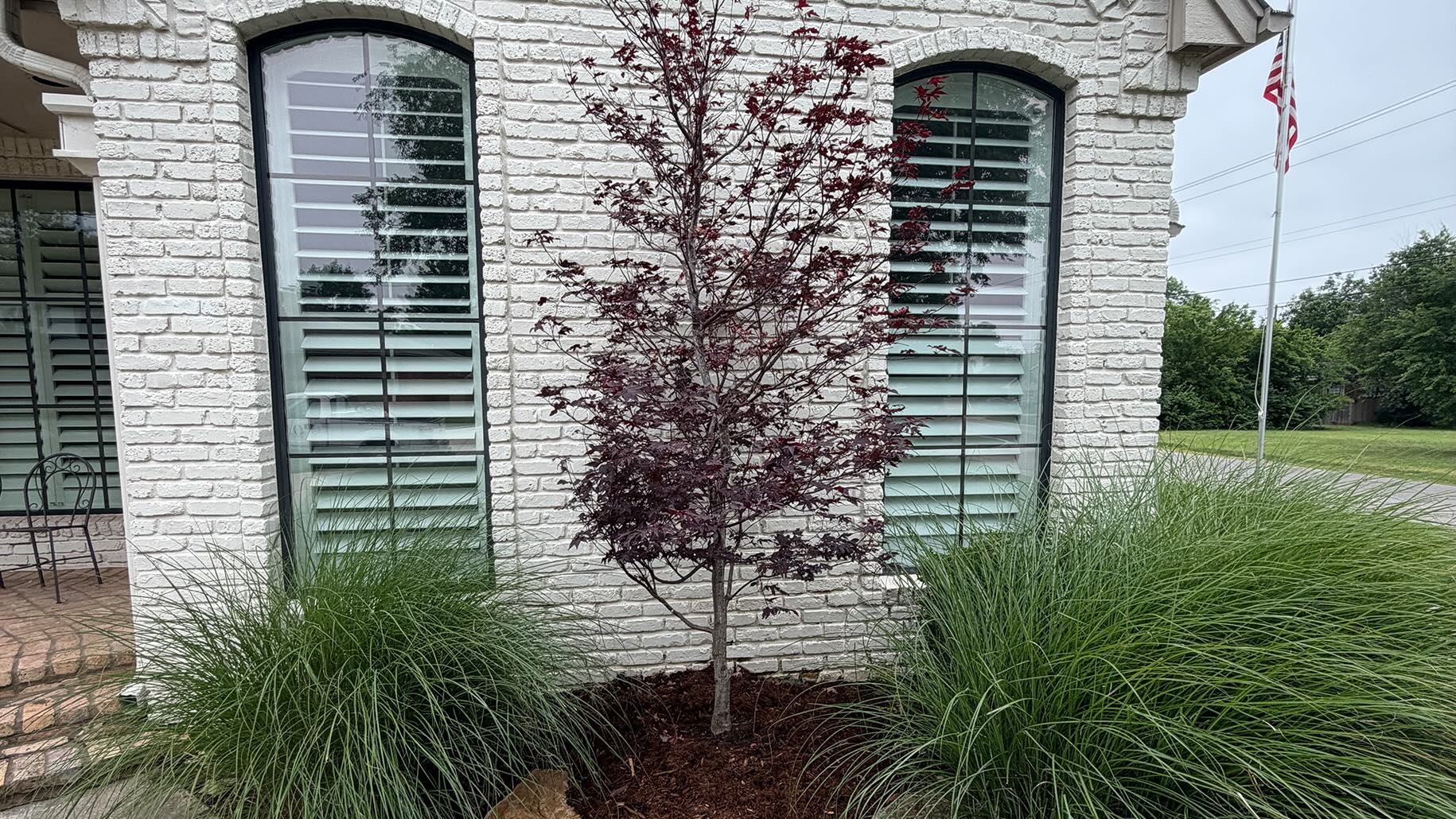
After evaluating the site conditions, we selected a Bloodgood Japanese maple as the ideal replacement. The area provides the perfect environment for the tree, with morning sun and afternoon shade helping protect the foliage during Oklahoma summers.
HARDSCAPING AND SOFTSCAPING:
The Bloodgood Japanese maple was chosen for its elegant upright structure and manageable canopy size. Unlike the previous deodar cedars, the maple will maintain a more refined form that complements the architecture without obstructing views or natural light.
SUSTAINABLE PRACTICES:
The Japanese maple is significantly better suited to the moisture conditions of the site and has non-invasive roots, reducing the risk of future issues near the foundation and sidewalks. Its burgundy foliage also creates beautiful contrast against the home’s creamy white brick, providing year-round visual interest.


VISUAL APPEAL:
The new tree creates a striking focal point with rich burgundy foliage that enhances the home’s exterior palette and overall curb appeal.
ENHANCED FUNCTIONALITY:
The upright canopy preserves the homeowner’s natural light and keeps the front elevation feeling open and balanced.
SUSTAINABILITY ACHIEVEMENTS:
Choosing a tree better adapted to the site conditions greatly improves long-term health and reduces the likelihood of future disease and replacement.
This project highlights the importance of proper plant selection and understanding site conditions. By replacing the failing deodar cedar with a thoughtfully chosen Bloodgood Japanese maple, OAK Outdoors provided the homeowner with a healthier, longer-lasting, and more visually balanced solution.